Anatomy books

Thursday, December 28, 2023

Difference between corticospinal tract and corticonuclear tract

 Difference between corticospinal tract and corticonuclear tract

<script async src="https://pagead2.googlesyndication.com/pagead/js/adsbygoogle.js?client=ca-pub-1234567890123456" crossorigin="anonymous"></script>

For learning anatomy, please visit :

My youtube channel :  @easyhumanatomy73

My website : http://easyhumananatomy.com

My facebook pagehttps://www.facebook.com/easyhumanatomy/

My bloghttp://www.easyhumanatomy73.blogspot.com

My blog:  Difference between http://www.microscopicanatomybd.blogspot.com

Corticonuclear tract

Corticospinal tract

Definition: motor pathway from the motor cortex of the brain to the motor nuclei of cranial nerves within the brainstem.

Definition: motor pathway from the brain’s motor cortex to lower motor neurons located in the anterior horn of the spinal cord’s gray matter. Divided into the anterior corticospinal tract (supplies axial muscles) and the lateral corticospinal tract (supplies muscles of the limbs).

Function: responsible for voluntary movement of the muscles of the face (CN. VII), head and neck (CN. XI). Also involved in phonation, swallowing and facial expression. (CN. VII and IX)

Function: responsible for voluntary movement of the muscles of the limbs and trunk.

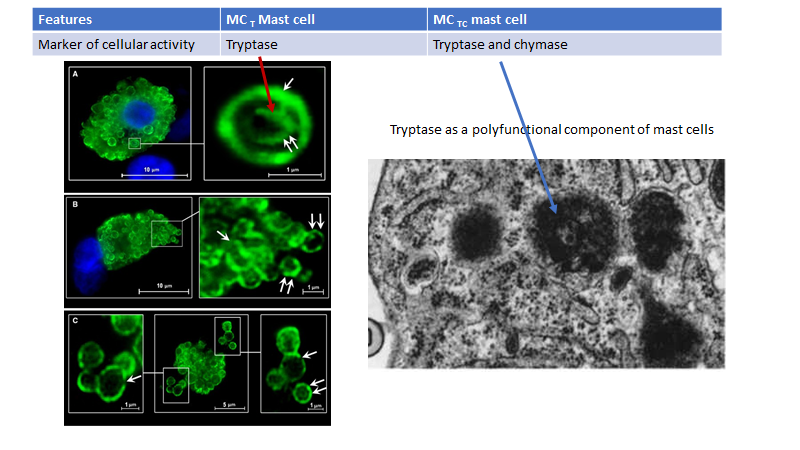
Difference between connective tissue mast cell and mucosal mast cell

 Difference between connective tissue mast cell and mucosal mast cell

For learning anatomy, please visit :

My youtube channel :  @easyhumanatomy73

My website : http://easyhumananatomy.com

My facebook pagehttps://www.facebook.com/easyhumanatomy/

My bloghttp://www.easyhumanatomy73.blogspot.com

My blog:  Difference between http://www.microscopicanatomybd.blogspot.com


Topics

connective tissue mast cell

  mucosal mast cell

Another name

Also known as MCTC mast cell

Also known as MCmast cell

Location

Skin , intestinal submucosa, breast and axillary lymph nodes

Lungs, intestinal mucosa

Granules and its internal structure

Granules with Lattice like internal structure

Granule with a scroll like internal structure

Granules contain

Tryptase and chymase

Only tryptase


Differences between the electrical and chemical synapses.

 Differences between the electrical and chemical synapses.

For learning anatomy, please visit :

My youtube channel :  @easyhumanatomy73

My website : http://easyhumananatomy.com

My facebook pagehttps://www.facebook.com/easyhumanatomy/

My bloghttp://www.easyhumanatomy73.blogspot.com

My blog:  Difference between http://www.microscopicanatomybd.blogspot.com

Chemical synapses

Electrical synapses

It is present in higher vertebrates.

It is present in both lower and higher vertebrates and invertebrates.

Nerve impulse is transmitted using a neurotransmitter.

Nerve impulse is transmitted using ions.

Unidirectional transmission.

Bi-directional transmission.

Gaps between cells are around 20 nm

Smaller gaps - only 3 - 5 nm

Transmission is relatively slow - several milliseconds.

Transmission is fast - almost instant.

Either inhibitory or excitatory.

Excitatory.

Signal remains strong.

Signal will disappear over time.

Sensitive to pH and hypoxia.

Insensitive to pH and hypoxia.

Vulnerability to fatigue.

Relatively less vulnerable to fatigue.

Difference between pulsation of jugular vein and carotid artery

 Difference between pulsation of jugular vein and carotid artery

For learning anatomy, please visit :

My youtube channel :  @easyhumanatomy73

My website : http://easyhumananatomy.com

My facebook pagehttps://www.facebook.com/easyhumanatomy/

My bloghttp://www.easyhumanatomy73.blogspot.com

My blog:  Difference between http://www.microscopicanatomybd.blogspot.com

PULSATION OF JUGULAR VEIN

PULSATION OF CAROTID ARTERY

No pulsations palpable.

Palpable pulsations.

Pulsations obliterated by pressure above the clavicle.

Pulsations not obliterated by pressure above the clavicle.

Level of pulse wave decreased on inspiration; increased on expiration.

No effects of respiration on pulse.

Usually two pulsations per systole (x and y descents).

One pulsation per systole.

Prominent descents.

Descents not prominent.

Pulsations sometimes more prominent with abdominal pressure.

No effect of abdominal pressure on pulsation


Thursday, February 23, 2023

Anatomy of thyroid cartilage

 For learning anatomy, please visit :

My youtube channel :  @easyhumanatomy73

My website : http://easyhumananatomy.com

My facebook pagehttps://www.facebook.com/easyhumanatomy/

My bloghttp://www.easyhumanatomy73.blogspot.com

My blog:  Difference between http://www.microscopicanatomybd.blogspot.com

The thyroid cartilage is a substantial shield-shaped structure that is situated near the top of the larynx in the front of the neck (voice box). Due to variations in the size and shape of the larynx, it is frequently referred to as the Adam's apple and is more noticeable in men than in women.

The laryngeal prominence, also referred to as the Adam's apple, is the point where the two halves or plates of hyaline cartilage that make up the thyroid cartilage meet. The superior thyroid notch, which is modest and visible in certain persons, is located in front of the thyroid cartilage.

The larynx and vocal cords are shielded by the thyroid cartilage, which is also crucial for speech production. The muscles of the larynx are in charge of regulating the tension and positioning of the vocal cords during speech and singing. The vocal cords are linked to the rear of the thyroid cartilage. By providing places of attachment for the muscles involved in swallowing, the thyroid cartilage also contributes to this process.

Skin superficial fascia and deep fascia of neck Gold information to memorize


Skin superficial fascia and deep fascia of neck  Gold information to memorize

For learning anatomy, please visit :

My youtube channel :  @easyhumanatomy73

My website : http://easyhumananatomy.com

My facebook pagehttps://www.facebook.com/easyhumanatomy/

My bloghttp://www.easyhumanatomy73.blogspot.com

My blog:  Difference between : http://www.microscopicanatomybd.blogspot.com 

1.    All cutaneous nerve of neck are derived from cervical plexus except


greater occipital nerve which is derived from dorsal ramus of C2 spinal nerve


Thickest cutaneous nerve of the body

Greater occipital nerve


Cutaneous nerve which may pierce clavicle through and through


Intermediate supraclavicular nerve


Most important superficial vein in the neck


external jugular vein

Most commonly used external jugular vein for central venous cannulation catheterization


right external jugular vein

Muscle of neck representing panniculus carnosus of lower animals


Platysma


Cold abscess (tubercular abscess) abscess without signs of acute inflammation like pain and redness

Commonest cause of cold abscess in the neck


Tuberculosis of cervical vertebrae


Fibrous band connecting thyroid capsule to the cricoid cartilage


Ligament of Berry


Submandibular region, Gold information to memorize


Submandibular region

Gold information to memorize


1.    Key muscle of submandibular region

Ans: Hyoglossus

2.    Smallest of the three parts of large salivary glands

Ans : Sublingual salivary gland

3.    Wharton duct

Ans: Submandibular duct

4.    Ducts of Rivinus

Ans: Ducts of sublingual gland

5.    Langley ganglion

Ans: Submandibular ganglion

6.    Most commonly damaged artery during surgical removal of submandibular gland

Ans facial artery

7.    Most commonly damaged nerve during surgical removal of submandibular gland

Ans : lingual nerve damaged during ligation and divison of submandibular duct